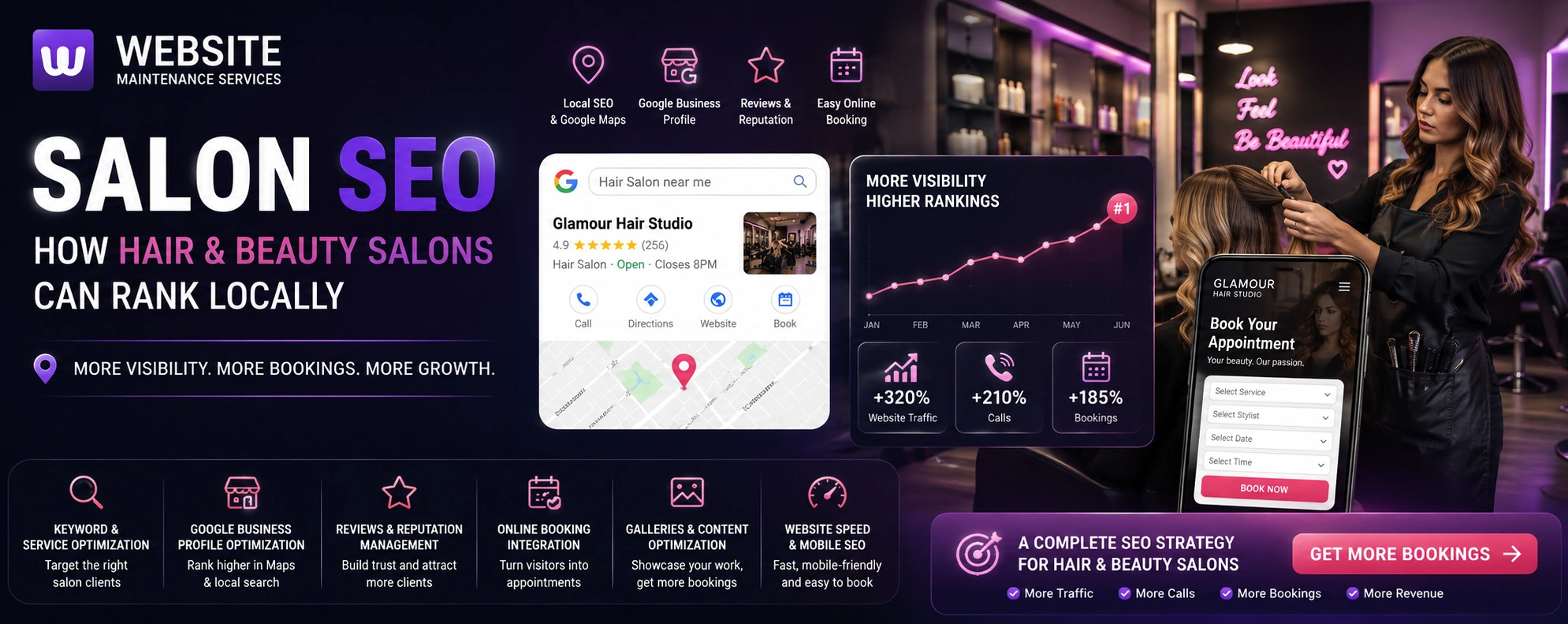
People searching for salon services want a nearby business with the right treatment, credible reviews, real results, and easy booking. This complete guide connects your Google Business Profile, service pages, reviews, booking system, citations, and reporting into one strategy built around confirmed appointments.
People searching for salon services usually want a nearby business that provides the right treatment, has credible reviews, shows real results, and makes it easy to book an appointment.
They may search for a hair salon, nail technician, color specialist, aesthetician, or beauty professional close to their home, workplace, hotel, or current location. Before booking, they often compare photographs, service menus, prices, opening hours, stylist profiles, reviews, and appointment availability.
Salon SEO is the process of improving a beauty business’s visibility across Google Search, Google Maps, service pages, local directories, and other online channels that influence appointment decisions.
In short: Salon SEO is the process of improving a beauty business’s visibility across Google Search, Google Maps, service pages, local directories, and other online channels that influence appointment decisions.
A complete salon SEO strategy connects:
- Google Business Profile optimization
- Hair and beauty service pages
- Location-specific content
- Stylist and beauty-professional profiles
- Online booking functionality
- Customer reviews
- Accurate business citations
- Image and gallery optimization
- Mobile website performance
- Appointment and revenue tracking
Agencies managing campaigns for hair salons, nail salons, spas, aestheticians, and other beauty businesses can use a structured white label local SEO for agencies service to support recurring profile management, citation cleanup, service-page optimization, reporting, and location-focused content behind their own brand.
The BasicsWhat Is Salon SEO?
Salon SEO helps a beauty business appear when potential clients search for relevant services in a specific location.
Examples include:
- Hair salon near me
- Beauty salon in [City]
- Hairdresser near me
- Balayage salon in [City]
- Hair colorist near me
- Nail salon in [Neighborhood]
- Facial treatment near me
- Hair extensions in [City]
- Eyelash extensions near me
- Salon accepting new clients
The objective is not simply to rank for the word “salon.” The objective is to match the business’s real services, professionals, location, and availability with people who are likely to request an appointment.
Google explains that local results are primarily influenced by relevance, distance, and prominence. Relevance concerns how well a business matches the search, distance considers the searcher’s location, and prominence reflects how established the business appears online. Review Google’s local ranking guidance before making promises about local map positions.
The CaseWhy SEO Matters for Hair and Beauty Salons
A salon may provide excellent services but still lose appointments when its online information is incomplete or difficult to find.
Potential clients may compare:
- Services offered
- Stylist experience
- Before-and-after photographs
- Prices or starting prices
- Opening hours
- Location and parking
- Customer reviews
- Appointment availability
- Cancellation policies
- Online booking convenience
- Accessibility
- Overall brand presentation
Effective SEO for salons improves both discoverability and conversion. It helps prospective clients find the business and gives them enough confidence to contact the salon or book online.
Rankings alone are not the final goal. A successful campaign should contribute to qualified website visits, phone calls, booking-form submissions, confirmed appointments, repeat visits, and measurable revenue.
StrategyKeyword Strategy for Salon SEO
The supplied keyword data shows several related opportunities that can support one connected topic cluster.
| Keyword | Search Volume | Difficulty | Recommended Use |
|---|---|---|---|
| hair salon keywords | 1,000 | 10 | Dedicated keyword-research section or supporting article |
| hair salon SEO | 880 | 13 | Major secondary keyword |
| SEO for hairdressers | 590 | 8 | Secondary keyword and H2 variation |
| local SEO strategies for beauty professionals | 320 | 0 | Supporting section or separate article |
| salon SEO | 260 | 12 | Primary keyword |
| SEO for hair salon | 260 | 8 | Natural variation in the article |
| beauty salon SEO | 140 | 10 | Secondary keyword |
| SEO for salons | 140 | 6 | Natural topical variation |
| SEO for beauty salon | 110 | 6 | Supporting variation |
| SEO for beauty salons | 110 | 7 | Supporting variation |
| SEO for nail salons | 70 | 0 | Dedicated subsection or related article |
| aesthetician SEO | 70 | 0 | Dedicated subsection or related article |
| affordable SEO services for salons | 50 | 4 | Commercial service-page support |
| salon software local SEO | 40 | 2 | Booking and reporting subsection |
These keywords should not be repeated unnaturally. The article should primarily answer the searcher’s questions while using related phrases where they fit the meaning.
Queries such as “hair color SEO” or “hair dye SEO” may have ambiguous intent. Before creating dedicated pages around them, inspect the search results to determine whether users are seeking salon marketing advice, hair-color services, products, or another topic.
FoundationUnderstand the Salon Customer Journey
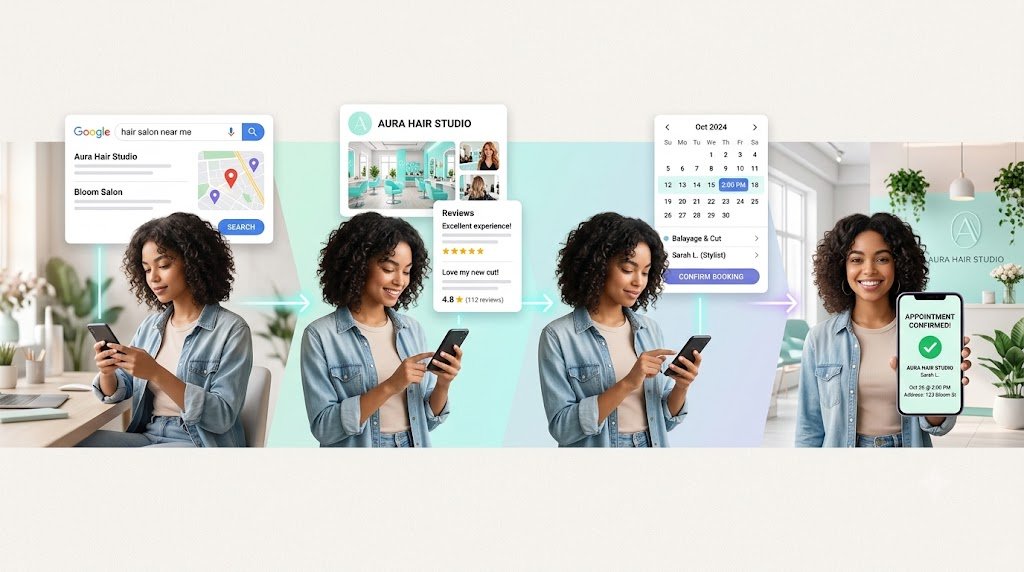
A typical salon customer journey may include the following stages:
- The person identifies a beauty or hair-care need.
- They search for a service near their location.
- They compare Google Maps listings and organic results.
- They review photographs, ratings, prices, and service descriptions.
- They check individual stylists or beauty professionals.
- They open the booking page.
- They select a service, professional, date, and time.
- The salon confirms the appointment.
- After the service, the customer may return or leave feedback.
Every stage can create friction. A prospective client may leave because the service is not clearly listed, the booking link is broken, the gallery looks outdated, prices are unclear, or the website performs poorly on mobile.
Salon SEO should therefore improve the complete path from search to confirmed appointment.
Step 1Start With a Complete Salon SEO Audit
Before publishing new content, review the salon’s current visibility, website, profiles, citations, reviews, and booking experience.
Google Business Profile Audit
Review:
- Profile ownership and verification
- Official salon name
- Primary and additional categories
- Address and map pin
- Phone number
- Website link
- Booking link
- Opening hours
- Holiday hours
- Services
- Business description
- Photographs and videos
- Reviews and responses
- Duplicate profiles
- Former salon locations
Website Audit
Check:
- Search-engine indexability
- Website structure
- Service-page coverage
- Location pages
- Stylist profiles
- Gallery pages
- Internal links
- Page titles and headings
- Mobile usability
- Page speed
- Booking functionality
- Structured data
- Broken links
- Redirects
- Conversion tracking
Local Presence Audit
Compare the salon’s name, address, phone number, website, opening hours, categories, and booking information across directories and beauty platforms.
Agencies can use standardized local SEO agency resources to organize onboarding, profile access, keyword mapping, citation audits, monthly workflows, and quality-control checks.
Step 2Build a Salon Keyword-to-Page Map
One of the most common mistakes in beauty salon SEO is trying to rank every page for the same broad keyword.
A better approach assigns different search intentions to specific pages.
| Website Page | Suggested Search Focus |
|---|---|
| Homepage | Hair or beauty salon in [City] |
| Haircut page | Haircuts in [City] |
| Hair-color page | Hair colorist in [City] |
| Balayage page | Balayage salon in [City] |
| Hair-extension page | Hair extensions in [City] |
| Nail-service page | Nail salon in [City] |
| Facial page | Facial treatments in [City] |
| Lash page | Eyelash extensions in [City] |
| Stylist profile | [Stylist Name], hair stylist in [City] |
| Location page | Salon in [Neighborhood] |
| Booking page | Book a salon appointment in [City] |
Keyword selection should consider:
- The services genuinely offered
- Search intent
- Location relevance
- Appointment value
- Competition
- Current search results
- Salon capacity
- Staff expertise
- The correct page for the query
Step 3Optimize the Google Business Profile
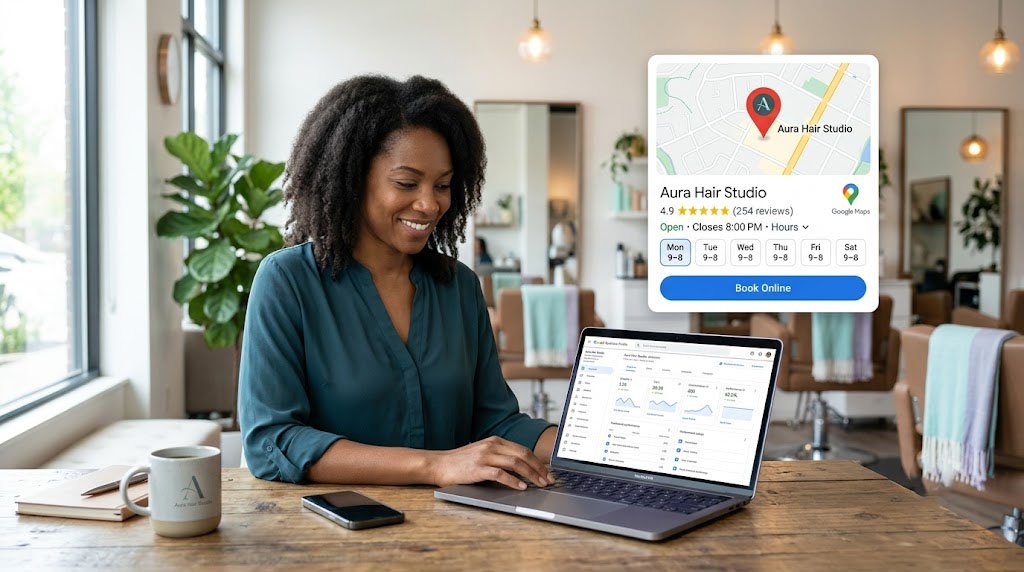
A salon’s Google Business Profile can become one of its most important appointment channels.
Potential clients can use it to:
- Call the salon
- Request directions
- Visit the website
- Open the booking platform
- Check opening hours
- View services
- Read reviews
- Browse photographs
Use the Real Salon Name
Use the business name that appears on the salon’s signage, website, social profiles, stationery, and real-world branding.
Do not add phrases such as “best hair salon,” “balayage specialist,” or several neighborhood names unless they genuinely form part of the established business name.
Google requires businesses to represent themselves accurately and use precise real-world information. Review the official Google Business Profile representation guidelines.
Select Accurate Business Categories
Choose the most specific available primary category that represents the salon’s main business.
Depending on the services and available categories, suitable options may relate to:
- Hair salon
- Beauty salon
- Nail salon
- Hairdresser
- Eyelash salon
- Facial spa
- Beauty supply services where genuinely applicable
Do not select every beauty-related category. Google recommends selecting a specific primary category and using additional categories only when they describe genuine secondary activities. Review Google’s Business Profile category guidance.
Add Accurate Salon Services
The service menu may include:
- Women’s haircuts
- Men’s haircuts
- Children’s haircuts
- Blowouts
- Hair coloring
- Highlights
- Balayage
- Color correction
- Hair extensions
- Keratin treatments
- Bridal hair
- Manicures
- Pedicures
- Facials
- Waxing
- Lash treatments
- Brow services
Google allows eligible service businesses to add grouped services, descriptions, and in some situations pricing information. Review Google’s Business Profile services guidance before creating custom entries.
Add a Direct Appointment Link
The booking link should lead to the most relevant appointment page rather than sending clients through several unnecessary steps.
A useful booking destination should clearly show:
- Available services
- Service duration
- Prices or starting prices
- Available professionals
- Appointment times
- Deposit requirements
- Cancellation information
Step 4Create Dedicated Salon Service Pages
A short service list on the homepage is not enough for a competitive hair salon SEO strategy.
Important services should have their own pages when the salon can provide useful and distinct information.
A strong service page may explain:
- What the service includes
- Who it may suit
- Available options
- Approximate duration
- Pricing or starting price
- Maintenance requirements
- The professionals providing it
- Related photographs
- Common client questions
- How to book
Hair-Color Service Pages
Instead of one generic color page, a salon may create useful pages for major services such as:
- Balayage
- Highlights
- Full hair color
- Root touch-ups
- Color correction
- Fashion colors
- Grey blending
Only create separate pages when the salon genuinely provides the service and can add enough useful information to avoid thin or repetitive content.
Step 5Build Stylist and Beauty-Professional Profiles
Many salon clients choose a professional before choosing an appointment time.
A detailed profile can include:
- Professional name
- Role
- Years of relevant experience where accurate
- Specialist services
- Training or certifications
- Preferred techniques
- Portfolio photographs
- Languages spoken
- Working days
- Booking link
Connect profile pages to relevant service pages. For example, a color specialist’s profile can link to balayage, highlights, and color-correction pages.
Do not create thin profiles containing only a name and photograph. The page should help clients decide whether the professional matches their needs.
Step 6Create Useful Salon Location Pages
A salon with more than one genuine branch should create a separate page for each location.
Each page may include:
- Complete address
- Local phone number
- Opening hours
- Services offered
- Professionals working there
- Parking information
- Public transportation details
- Accessibility information
- Original interior and exterior photographs
- Nearby landmarks
- Location-specific booking link
Do not create pages for cities or neighborhoods where the salon has no genuine location or meaningful service presence.
Changing only the city name across dozens of otherwise identical pages provides little value and can create duplication problems.
Step 7Use Salon Galleries as Search and Conversion Assets
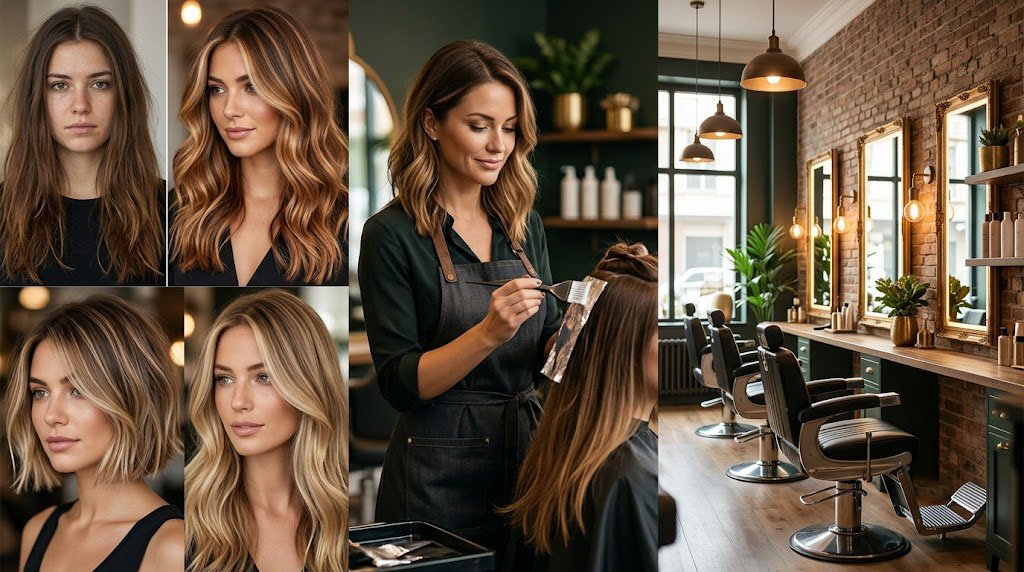
Hair and beauty services are highly visual. Prospective clients often want to see evidence of the salon’s style, quality, and range of work.
A useful gallery can feature:
- Haircuts
- Hair-color transformations
- Balayage results
- Hair extensions
- Bridal styles
- Nail designs
- Lash work
- Brow treatments
- Salon interiors
- Professional team photographs
For each image:
- Use a descriptive filename
- Compress the file
- Use appropriate width and height attributes
- Write meaningful alternative text
- Add useful surrounding content
- Obtain client permission where required
- Avoid misleading editing
Weak alternative text:
Best hair salon SEO beauty salon hairdresser near me
Better alternative text:
Shoulder-length brunette balayage with soft caramel highlights
Step 8Connect Salon Software With Local SEO
Salon software can support appointment management, but it should also fit the wider local SEO and measurement strategy.
Review whether the booking platform:
- Works properly on mobile
- Loads quickly
- Displays accurate services
- Uses the correct salon location
- Shows the correct professionals
- Allows direct service links
- Preserves tracking information
- Provides completed-booking data
- Handles deposits securely
- Explains cancellations clearly
The keyword “salon software local SEO” represents a useful supporting topic because booking technology can affect conversion measurement, page usability, and the customer journey.
Do not count every booking-page visit as an appointment. Track the difference between:
- Booking-page visit
- Service selection
- Appointment-time selection
- Form completion
- Confirmed appointment
- Completed salon visit
Step 9Generate Genuine Salon Reviews
Reviews can influence whether a prospective client feels comfortable booking a salon or individual professional.
A responsible review workflow can include:
- Complete the customer’s appointment.
- Send a polite follow-up message.
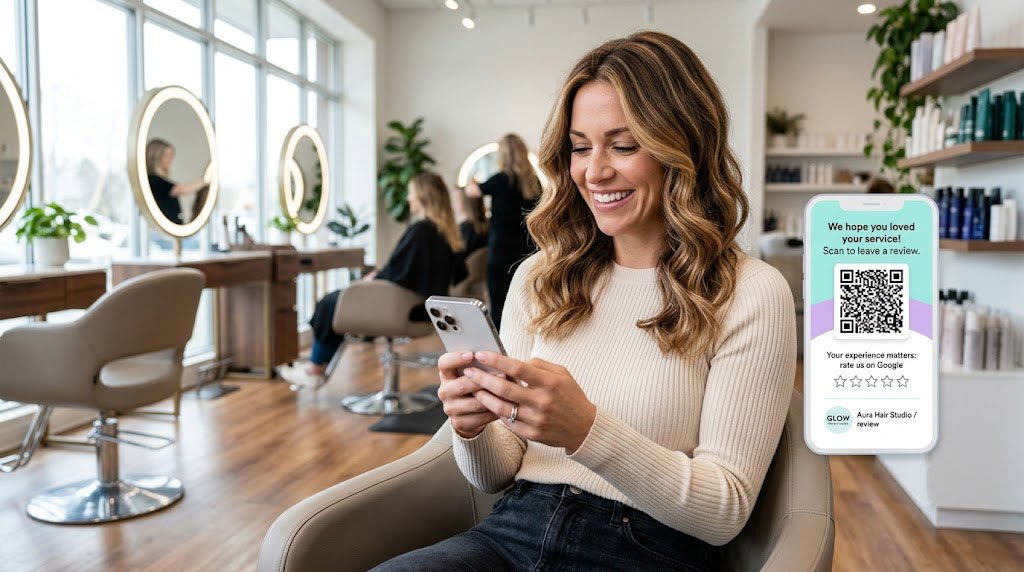
- Provide a direct review link or QR code.
- Ask for honest feedback.
- Keep participation optional.
- Respond professionally.
- Use recurring concerns to improve the service.
Google allows businesses to ask customers for genuine reviews but prohibits free or discounted services in exchange for reviews, review changes, or removal of negative feedback. Review Google’s guidance for earning reviews.
The United States Federal Trade Commission also prohibits fake reviews and incentives that are conditioned on a particular positive or negative sentiment. Review the FTC Consumer Reviews and Testimonials Rule guidance.
Example Response to a Negative Salon Review
Thank you for sharing your feedback. We are sorry that your experience did not meet expectations. Please contact the salon directly with your appointment details so our team can review what happened and discuss the matter privately.
Do not argue publicly or reveal unnecessary customer, payment, appointment, or personal information.
Step 10Build and Clean Up Salon Citations
A local citation is an online mention of the salon’s business information.
Important citation details include:
- Official business name
- Address
- Phone number
- Website
- Opening hours
- Business category
- Booking link
- Services
Citations may appear on:
- General business directories
- Beauty directories
- Appointment platforms
- Local shopping directories
- Wedding directories
- Local chambers of commerce
- Community websites
- Social profiles
Prioritize quality, relevance, and consistency over the number of submissions.
Audit:
- Old salon names
- Previous addresses
- Incorrect telephone numbers
- Duplicate profiles
- Outdated opening hours
- Broken booking links
- Former professionals listed as active
Step 11Earn Relevant Local Backlinks
Useful link opportunities may come from:
- Wedding venues
- Bridal websites
- Fashion photographers
- Local magazines
- Beauty schools
- Community organizations
- Shopping districts
- Chambers of commerce
- Local events
- Charitable partnerships
- Product distributors
A link should result from a real relationship, contribution, listing, partnership, event, or useful resource.
Avoid bulk link packages, automated comments, fake local-news sites, unrelated directories, and repetitive keyword-rich anchor text.
Step 12Publish Helpful Beauty and Hair Content
Educational content can help clients understand services before booking.
Useful topics include:
- How should you prepare for a balayage appointment?
- How often should hair color be refreshed?
- What is the difference between highlights and balayage?
- What should you know before getting hair extensions?
- How do you choose a haircut for your hair type?
- What happens during a color consultation?
- How long does a keratin treatment usually take?
- How should you prepare for a bridal hair trial?
- What should you consider before booking nail extensions?
- How do salon cancellation and deposit policies work?
Every article should link naturally to relevant service, stylist, gallery, location, and booking pages.
Agencies creating broader beauty-industry content clusters can review the local SEO blog for additional strategy and campaign ideas. For a closely related local-service example from another industry, see this detailed guide to SEO for barbershops, which applies many of the same local-search principles to a different appointment-based business.
Step 13Use Social Media Without Treating It as a Guaranteed Ranking Factor
Social content can support salon discovery, customer trust, brand recognition, and referral traffic.
Useful content may include:
- Before-and-after results
- Stylist introductions
- Service explanations
- Appointment availability
- Salon tours
- Hair-care advice
- Seasonal looks
- Client feedback with permission
Social engagement should not be presented as a confirmed direct Google ranking factor. Its main value is supporting brand visibility, website visits, customer relationships, and branded searches.
Keep salon names, addresses, phone numbers, website links, and booking information consistent across major social profiles.
Step 14Improve Website Speed and Mobile Usability
Many people search for salons and book appointments from mobile devices. The website must make the next step easy.
A mobile visitor should be able to:
- Tap the phone number
- View the service menu
- Check prices
- Browse photographs
- Review stylist profiles
- Find the salon
- Open the booking platform
- Complete an appointment request
Technical improvements may include:
- Compressing gallery images
- Using modern image formats
- Reducing unnecessary scripts
- Improving server response
- Preventing layout shifts
- Optimizing fonts
- Maintaining HTTPS
- Repairing broken links
- Testing booking buttons
- Maintaining website backups
- Monitoring uptime
Google’s Core Web Vitals documentation explains the current measurements for loading performance, responsiveness, and visual stability. Good performance supports usability, but it does not guarantee rankings.
Step 15Add Appropriate Local Business Structured Data
Structured data can help search engines interpret information about a salon and its location.
Relevant information may include:
- Salon name
- Address
- Phone number
- Website
- Opening hours
- Images
- Logo
- Price range
- Social profiles
- Geographic coordinates
The markup must match visible website information.
Do not add:
- Fake ratings
- Invented reviews
- Incorrect prices
- Services not offered
- Locations where the salon does not operate
- Misleading opening hours
Review Google’s LocalBusiness structured-data documentation and validate the markup before publishing.
Step 16Track Appointments and Revenue Beyond Rankings
Salon SEO reports should distinguish visibility metrics from business outcomes.
| Metric | What It Represents |
|---|---|
| Search impression | A salon page or profile appeared in search. |
| Website visit | A person opened the salon website. |
| Call click | A person tapped the salon’s phone number. |
| Booking-page visit | A person opened the appointment platform. |
| Booking start | A person selected a service or professional. |
| Confirmed appointment | The appointment was successfully reserved. |
| Completed visit | The customer received the booked service. |
| Returning customer | The customer booked another appointment. |

A monthly report should answer:
- What SEO work was completed?
- Which services gained visibility?
- Which locations improved?
- Which pages generated booking visits?
- How many calls and appointment requests occurred?
- How many appointments were confirmed?
- Which technical or profile issues remain?
- What work is planned next?
Agencies can use white label local ranking reports to communicate visibility, profile interactions, citation progress, completed work, and future priorities under their own branding.
The available local SEO reporting guides can help separate rankings, traffic, booking actions, confirmed appointments, and revenue rather than combining them into one unclear performance number.
Step 17Create a Multi-Location Salon SEO Strategy
Each genuine salon branch should have its own:
- Location page
- Google Business Profile
- Address
- Local phone number
- Opening hours
- Service information
- Professional profiles
- Original photographs
- Booking link
- Citations
- Ranking tracking
- Appointment reporting
Do not create profiles for virtual offices, mailing addresses, or places where customers cannot receive salon services.
For examples of how local campaigns can be structured and evaluated, review the available local SEO case studies.
IndependentsLocal SEO Strategies for Beauty Professionals
Independent beauty professionals may operate inside a salon, rent a chair or suite, work from a qualifying studio, or travel to clients.
The correct strategy depends on the real business arrangement.
An independent professional should review:
- Whether clients can contact them directly
- Whether they use a distinct business name
- Whether they control their own appointments
- Whether they have permanent signage
- Whether customers visit the location
- Whether the address qualifies under Google’s policies
- Whether an existing salon profile already represents the location
Do not create duplicate or misleading profiles merely to gain more visibility.
NicheHow SEO for Nail Salons Differs
SEO for nail salons should emphasize specific services, visual work, hygiene information, appointment availability, and local relevance.
Potential pages may cover:
- Manicures
- Pedicures
- Gel nails
- Acrylic nails
- Nail extensions
- Nail art
- Removal services
- Bridal nails
Use accurate service information and avoid creating one page for every minor style when a stronger consolidated page would better serve clients.
NicheHow Aesthetician SEO Differs
Aesthetician SEO should clearly explain the treatments offered, practitioner qualifications, service limits, consultation process, and location.
Potential content may cover:
- Facial services
- Skin consultations
- Waxing
- Brow services
- Lash services
- Non-medical skin-care treatments
Do not make medical claims or advertise regulated treatments without the qualifications, approvals, and professional oversight required in the relevant jurisdiction.
RoadmapA Practical 90-Day Salon SEO Plan
Audit and Foundation
- Audit the website and Business Profile.
- Confirm ownership and verification.
- Document the approved business information.
- Review categories and services.
- Test booking links.
- Audit salon citations.
- Repair broken pages.
- Map keywords to service pages.
- Review website speed.
- Establish ranking and booking baselines.
Improve Relevance and Trust
- Optimize the Google Business Profile.
- Improve major service pages.
- Create detailed stylist profiles.
- Improve location pages.
- Add accurate service information.
- Upload original salon photographs.
- Build a compliant review workflow.
- Correct priority citations.
- Add appropriate structured data.
Authority and Conversion
- Publish client-focused content.
- Develop relevant local links.
- Improve mobile performance.
- Simplify the booking process.
- Track completed appointments.
- Review high-performing services.
- Update weak gallery and service pages.
- Prepare a complete monthly report.
- Create the next 90-day roadmap.
Avoid TheseCommon Salon SEO Mistakes
- Adding keywords to the official business name
- Choosing unrelated profile categories
- Using inconsistent salon information
- Publishing one page for every service
- Creating thin neighborhood pages
- Using oversized gallery images
- Publishing photographs without permission
- Leaving former stylists on the website
- Using broken booking links
- Buying fake reviews
- Offering discounts for five-star reviews
- Buying bulk backlinks
- Sending every internal link to the homepage
- Measuring booking clicks as completed appointments
- Guaranteeing Google Maps rankings
ReferenceSalon SEO Checklist
Google Business Profile
- Verified ownership
- Accurate salon name
- Correct primary category
- Accurate address and map pin
- Working phone number
- Correct website and booking links
- Current opening hours
- Complete services
- Original photographs
- Compliant review process
Website
- Dedicated service pages
- Useful stylist profiles
- Accurate location pages
- Optimized salon galleries
- Clear pricing information
- Working booking system
- Fast mobile performance
- Natural internal links
- Valid structured data
- Secure website connection
Authority and Measurement
- Accurate salon citations
- Relevant local links
- Genuine customer reviews
- Call tracking
- Booking tracking
- Confirmed appointment tracking
- Location-level reporting
- Monthly work documentation
FAQFrequently Asked Questions
How long does salon SEO take?
What is the best primary keyword for this article?
Does every salon service need a separate page?
Should every stylist have a profile page?
How many reviews does a salon need?
Can salons offer discounts for reviews?
Does social media improve salon rankings?
Can one salon rank across an entire city?
Is salon SEO useful for independent hairdressers?
Can an SEO company guarantee Google Maps rankings?
Scale Salon SEO Fulfillment Without Expanding Your Team
Salon SEO requires recurring work across profiles, service pages, galleries, citations, reviews, booking systems, technical maintenance, and reporting.
For agencies serving hair salons, nail salons, aestheticians, spas, and other beauty professionals, White Label Local SEO provides scalable local-search fulfillment that can operate behind the agency’s own brand.
You can learn more about our local SEO team and review the available local SEO white label pricing before selecting a recurring delivery model for your client portfolio.
TransparencyWebsite Transparency and Policy Resources
Agencies evaluating a service relationship can review our GDPR compliance information, privacy policy, and cookie policy for information about privacy, website data, and related responsibilities.
Our legal information and terms and conditions explain the framework governing use of the website and services.
Additional transparency resources include our affiliate disclosure, copyright notice, refund policy, and cancellation policy.