
A great haircut may bring a customer back, but first that customer has to discover your barbershop. This practical guide connects your website, Google Business Profile, reviews, booking system, content, and technical performance into one system built around real appointments.
A great haircut may bring a customer back, but first that customer has to discover your barbershop.
Today, that journey often begins online. A potential client may search for a haircut, compare barber portfolios, read reviews, check prices, visit several websites, and look for an available appointment—all before contacting a shop.
SEO for barbershops is the process of improving this entire discovery and booking journey. It is not limited to adding keywords to a website. Effective barbershop SEO connects your website, Google Business Profile, customer reviews, online booking system, service content, technical performance, business listings, and conversion tracking.
The goal is not simply to generate more website visitors. The real goal is to attract people who need your services and make it easy for them to become booked clients. Just as important, the site itself has to stay fast, secure, and current — the ongoing work covered by professional website care plans — because even strong SEO fails on a website that is slow or broken.
The BasicsWhat Is Barbershop SEO?
Barbershop SEO is a digital marketing strategy designed to improve a barbershop’s visibility when potential customers search for haircut and grooming services.
It usually covers three connected areas:
Website SEO helps service pages, barber profiles, location pages, and articles appear in organic search results.
Local search optimization improves how the business appears in Google Search and Maps for location-based searches.
Conversion optimization helps turn visitors into phone calls, directions requests, completed booking forms, and returning customers.
Google explains that local results are primarily influenced by relevance, distance, and prominence. A business cannot control a searcher’s physical distance, but it can improve relevance by providing detailed business information and strengthen prominence through reviews, links, and broader recognition. Google also states that there is no way to request or pay for a better organic local ranking.
That means sustainable barbershop SEO requires more than a one-time profile update. It requires a coordinated system.
FoundationUnderstand the Barbershop Customer Journey
Before choosing keywords or publishing content, understand how a potential client moves from discovery to appointment.
A typical journey may look like this:
- The customer realizes they need a haircut or grooming service.
- They discover a barbershop through search, social media, a recommendation, or an online booking marketplace.
- They compare haircut photos, services, prices, barber experience, reviews, location, and availability.
- They visit the website or booking profile.
- They select a service and barber.
- They complete the appointment.
- They visit the shop and receive the service.
- They leave a review, follow the shop online, or book another appointment.
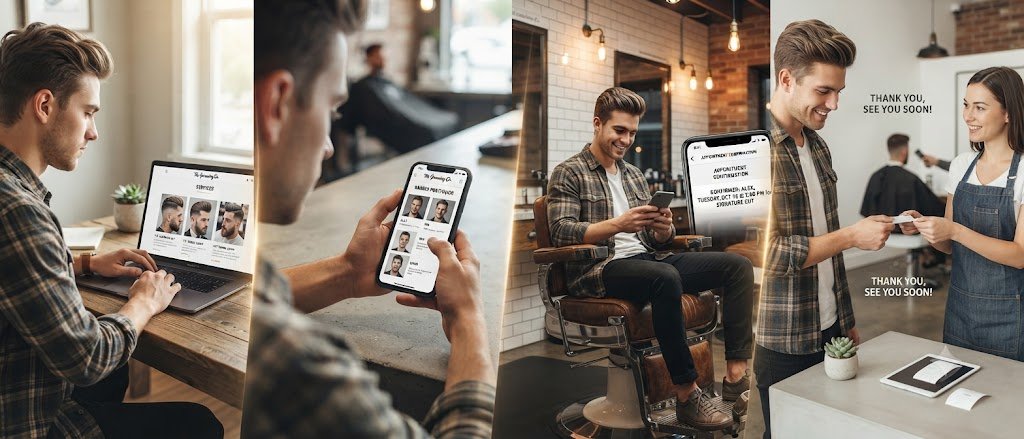
SEO should support every stage rather than focusing only on rankings. A page that ranks but does not answer questions or offer an obvious booking path may still fail to generate customers.
Step 1Build a Website That Turns Searchers Into Clients
Your website should act as the central destination for people who want to understand your services and book an appointment.
A barbershop website should normally include:
- A focused homepage
- Individual service pages
- Barber profile pages
- A gallery or portfolio
- An online booking page
- A pricing or service menu
- A reviews or testimonials section
- An About page
- A Contact and location page
- Helpful grooming and hairstyle content
Avoid placing every service inside one short page. Someone searching for a skin fade may have different needs from someone searching for a beard trim, kids haircut, hot towel shave, or wedding grooming package.
Separate service pages allow you to explain:
- What the service includes
- Who it is suitable for
- Approximate duration
- Pricing or starting price
- Available barbers
- Preparation or aftercare
- Related services
- How to book
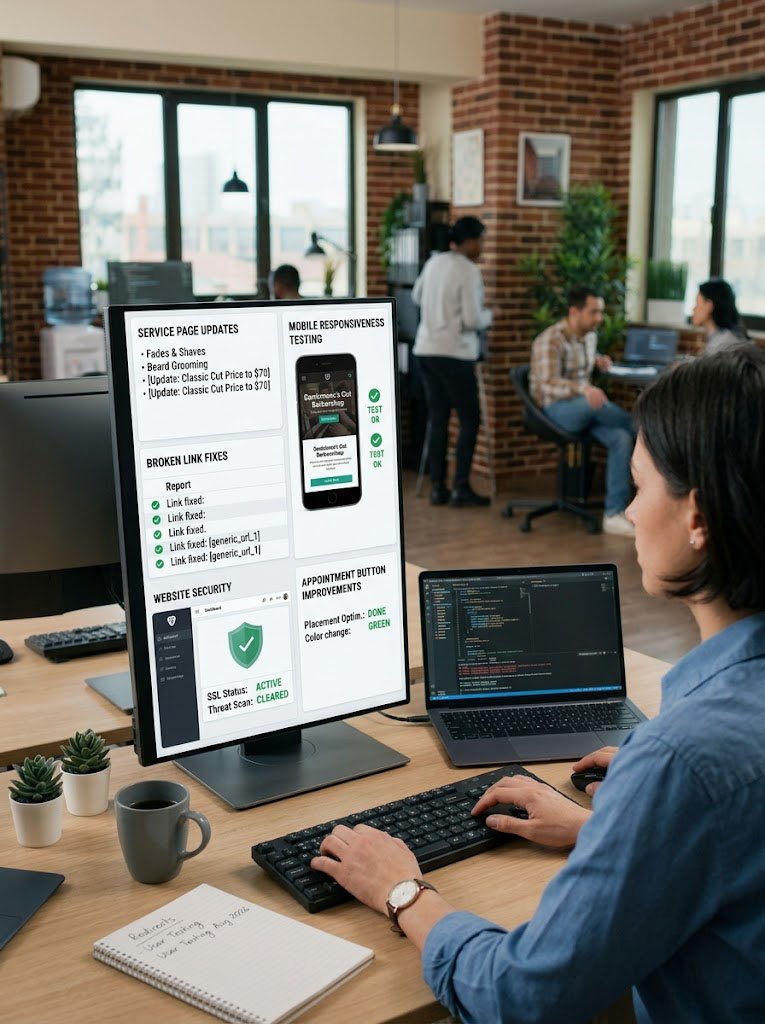
Every important page should contain a clear next action. Depending on the page, that action may be Book an Appointment, Choose Your Barber, Check Availability, or Call the Barbershop. Keeping those pages accurate, fast, and error-free over time is exactly what ongoing WordPress website maintenance is designed to handle.
Google recommends using the words people would use when searching in prominent areas such as page titles, primary headings, link text, and image alt text. It also recommends keeping content original, current, and useful rather than simply rewriting what competitors have already published.
For a real-world example of how a barbershop presents its brand and customer-facing information online, visit Woodward Barbers.
Step 2Create a Clear Keyword and Page Strategy
A barbershop should not attempt to rank every page for the same keyword.
Instead, assign a specific search purpose to each page.
For example:
| Page | Suggested Keyword Focus |
|---|---|
| Homepage | Barbershop in [City] |
| Haircut page | Men’s haircut in [City] |
| Skin fade page | Skin fade barber in [City] |
| Beard trim page | Beard trim in [City] |
| Kids haircut page | Kids barber in [City] |
| Barber profile | [Barber Name] at [Shop Name] |
| Booking page | Book a barber appointment |
| Blog article | How often should you get a fade? |
Keyword research should also consider how customers describe the service. One person may search for “men’s haircut,” while another searches for “barber fade,” “shape-up,” “taper haircut,” or “haircut and beard package.”
The purpose is not to force every variation into the text. The purpose is to understand customer language and build pages that satisfy different intentions.
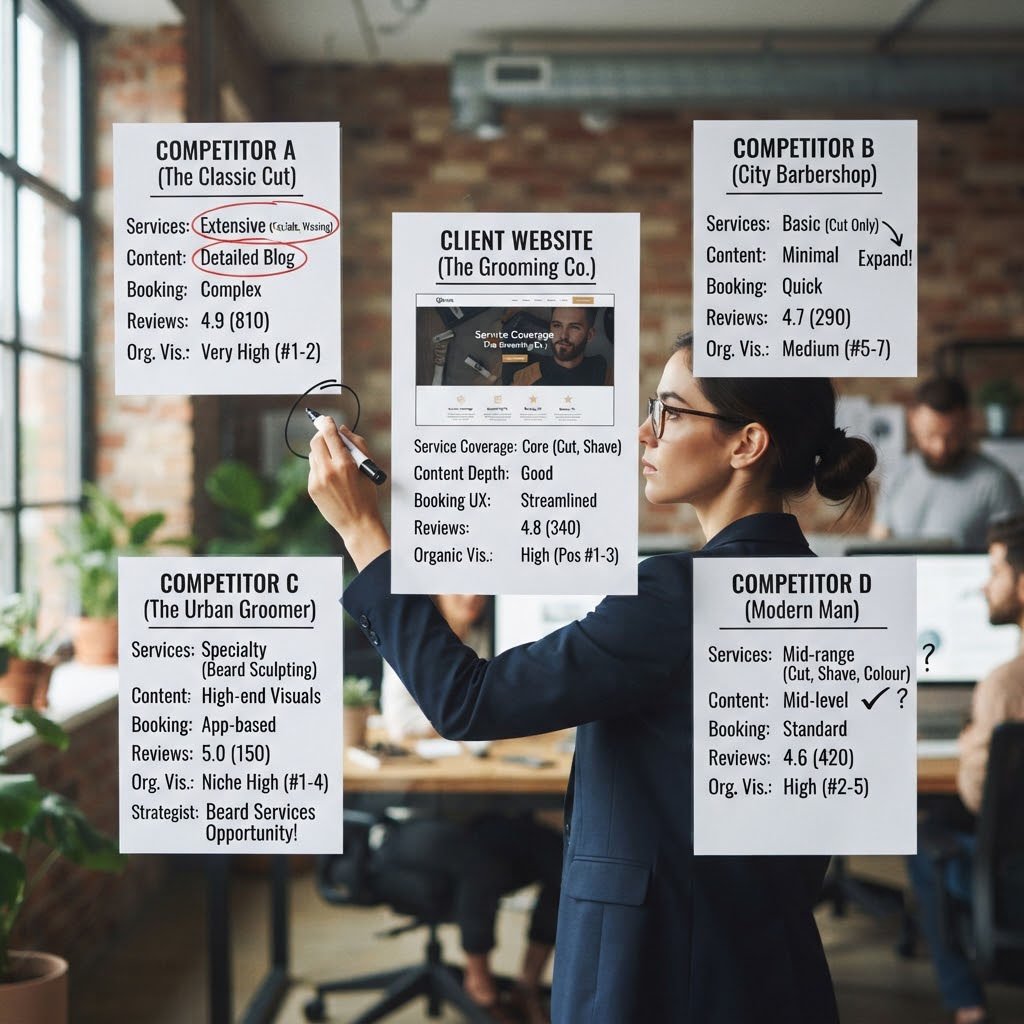
Competitor analysis can reveal missing service pages, weak booking experiences, underdeveloped content, review gaps, and topics that nearby businesses have not covered properly.
Step 3Build Topical Authority Around Haircuts and Grooming
Publishing random articles is not an effective content strategy.
A stronger approach is to build connected content clusters around the services your barbershop actually provides.
For example, a Skin Fade Pillar Page could connect to supporting articles such as:
- Skin fade vs. taper fade
- How often should you refresh a skin fade?
- Low fade vs. mid fade vs. high fade
- Best fade styles for different face shapes
- How to maintain a fade between appointments
A Beard Grooming Pillar Page might connect to:
- How often should you trim your beard?
- Beard fade vs. traditional beard trim
- How to choose a beard style for your face
- What happens during a hot towel shave?
- Beard care after a professional trim
Each article should link naturally to the appropriate service, barber profile, gallery, and booking page. Descriptive internal links help visitors navigate the website and help Google understand the relationship between pages. Publishing and refreshing this content on a regular schedule is part of good monthly website upkeep, not a one-time task.
Google’s guidance emphasizes people-first content that demonstrates actual knowledge, serves an intended audience, and leaves readers feeling they have learned enough to achieve their goal.
Therefore, the strongest articles should include genuine barbershop experience, such as:
- Advice from working barbers
- Original haircut photographs
- Before-and-after examples
- Maintenance recommendations
- Answers to questions clients regularly ask
- Insights based on local hair and grooming preferences
This is more valuable than mass-producing generic articles that could appear on any barbershop website.
Step 4Optimize the Google Business Profile
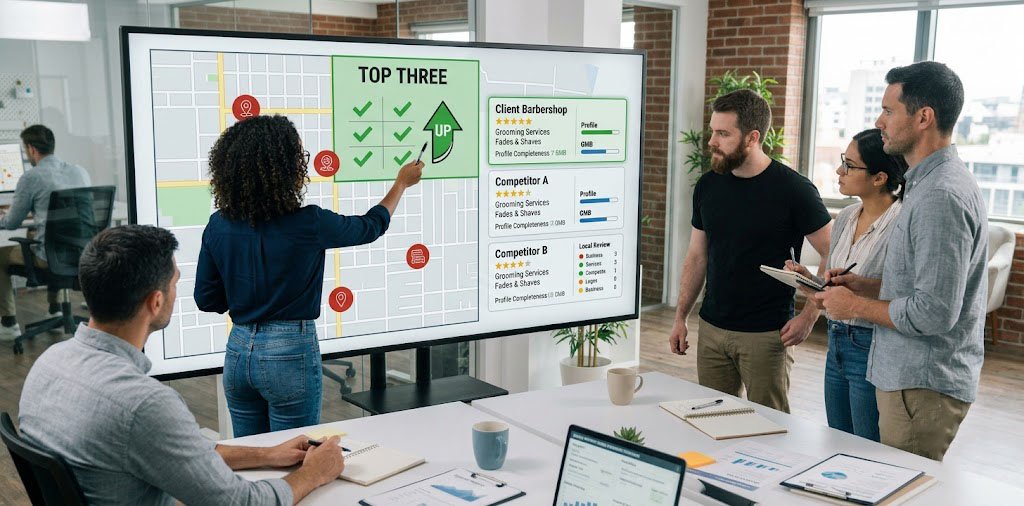
A Google Business Profile is one of the most important assets for a physical barbershop.
The profile should contain accurate and complete information, including:
- Official business name
- Correct address
- Phone number
- Website
- Booking link
- Regular and holiday hours
- Appropriate primary and secondary categories
- Service information
- Business description
- Storefront and interior photos
- Barber and haircut photos
- Regular updates and offers
Google recommends keeping business information complete and current because accurate details help the platform understand what the business offers and match it with relevant searches. Keeping those profile details in sync with your site is easier when it’s handled as part of ongoing website management.
Choose Categories and Services Carefully
Use the most accurate available primary category rather than selecting unrelated categories simply to reach more searches.
Add individual services such as:
- Classic haircut
- Skin fade
- Taper fade
- Beard trim
- Haircut and beard package
- Hot towel shave
- Kids haircut
- Senior haircut
- Head shave
- Grooming consultation
Services should match what customers can actually book.
Add a Reliable Booking Link
The booking link should send customers directly to a functional booking page, not to a generic homepage where they must search for the appointment button.
Google allows businesses to add links that help customers complete actions such as booking appointments. These links need to comply with Business Profile link policies and remain accessible to Google’s verification systems.
Publish Useful Profile Updates
Business Profile posts can include updates, offers, events, images, videos, and action buttons that direct customers to a booking or information page.
Possible post topics include:
- New barber introduction
- Weekend availability
- Seasonal haircut inspiration
- Grooming package
- New service launch
- Holiday opening hours
- Recent haircut transformation
- Appointment reminder
Step 5Upload Fresh and Useful Photos
Haircuts are visual services. Customers want to see the quality of the work, the environment, the team, and the overall experience before booking.
Build a varied photo library containing:
- Exterior and entrance photos
- Reception and waiting area
- Barber stations
- Full interior views
- Team photos
- Individual barber portraits
- Haircut transformations
- Skin fade close-ups
- Beard grooming results
- Hot towel shave service
- Tools and hygiene preparation
- Customer experience photos
- Seasonal shop updates
Do not upload many copies of nearly identical images. Prioritize authentic, well-lit, in-focus photographs that help customers understand the business.
Google recommends category-specific business photos and notes that exterior images can help customers recognize a location. Its current photo guidance recommends JPG or PNG files, appropriate file sizes, sufficient resolution, good lighting, sharp focus, and no excessive alterations.
Website images should also have descriptive filenames, relevant surrounding text, sensible alt text, and optimized file sizes. Google provides separate image SEO recommendations to help images become discoverable and properly associated with the page topic.
Step 6Create a Compliant Review Generation System
Reviews influence trust long before a customer enters the barbershop.
A practical review process may include:
- Complete the appointment.
- Send a polite review request by SMS or email.
- Provide a direct review link or QR code.
- Make the request easy but optional.
- Respond to the review professionally.
- Use recurring feedback to improve service.

Google allows businesses to request reviews using a review link or QR code and recommends responding to feedback to show that customer opinions matter.
However, do not offer discounts, free services, or other rewards in exchange for reviews. Do not ask only customers believed to be satisfied while preventing unhappy customers from reviewing. Google classifies incentivized, fake, pressured, or rating-manipulated reviews as policy violations.
A strong response to a positive review should thank the customer and refer naturally to the service they received.
A response to a negative review should remain calm, acknowledge the concern, avoid revealing private information, and invite the customer to continue the conversation directly.
Step 7Integrate Booksy or Another Online Booking System
Customers should be able to move from interest to appointment without unnecessary steps.
A booking experience should let them:
- Select a service
- See the price and duration
- Choose a barber
- View available times
- Select a date
- Confirm contact information
- Pay a deposit when applicable
- Receive confirmation and reminders
- Reschedule or cancel according to policy
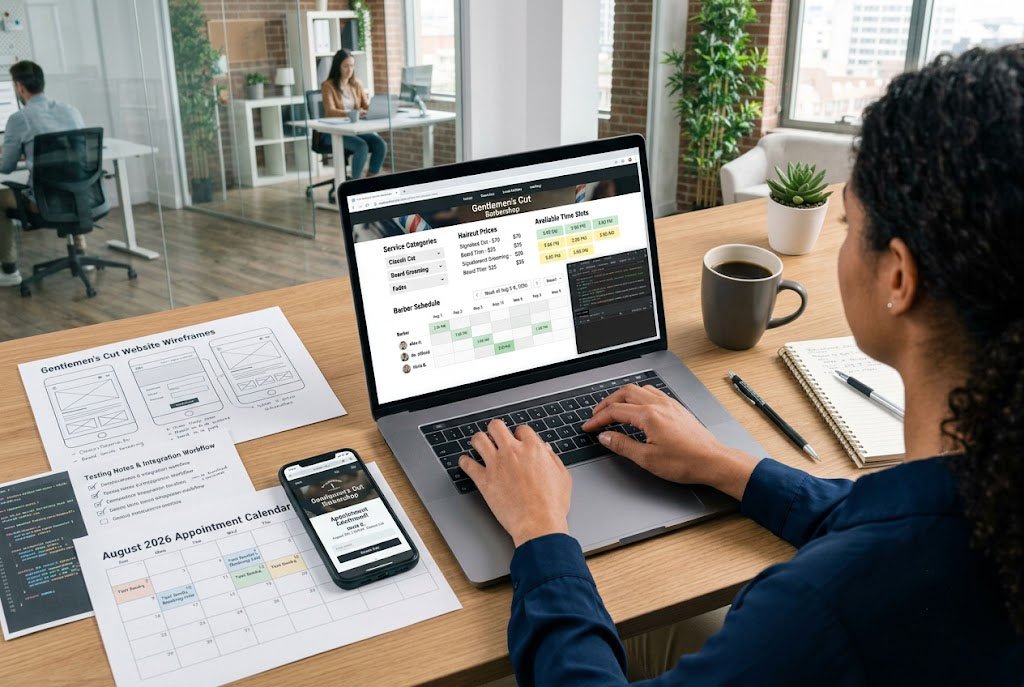
Booksy provides businesses with a unique booking widget code that can be added to JavaScript-enabled websites and CMS platforms that support custom script insertion. The website administrator is responsible for implementing and testing the widget correctly.
Booksy also supports booking through a business profile, website, social channels, and other connected touchpoints.
After integration, test the full process on:
- Desktop
- Tablet
- Android devices
- iPhones
- Different browsers
- Slow mobile connections
Confirm that services, prices, staff schedules, appointment duration, buffers, cancellation rules, deposits, and confirmation messages remain synchronized. On busier stores — especially those selling products alongside services — keeping these integrations working is part of ongoing eCommerce and booking maintenance.
Step 8Improve Website Speed and Technical Performance
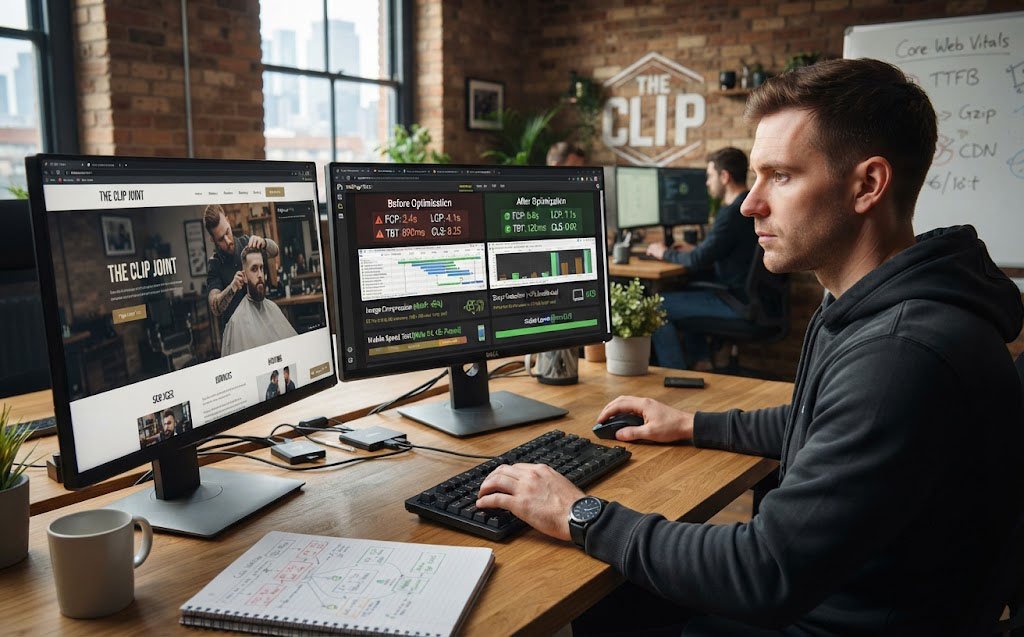
Potential clients may leave if a website takes too long to load, shifts unexpectedly, or becomes difficult to use after they click the booking button.
Technical optimization should cover:
- Image compression
- Modern image formats
- Lazy loading
- Browser caching
- Reduced unnecessary scripts
- Optimized fonts
- Reliable hosting
- Mobile responsiveness
- Secure HTTPS
- Broken link repair
- Redirect cleanup
- XML sitemap
- Search engine indexability
- Regular backups
- Uptime monitoring
The current Core Web Vitals are Largest Contentful Paint, Interaction to Next Paint, and Cumulative Layout Shift. They measure perceived loading performance, responsiveness, and visual stability, and you can monitor them for your own pages in the Core Web Vitals report in Google Search Console.
Do not optimize only for a performance score. Test whether a real customer can quickly:
- Read the service menu
- View haircut photos
- Tap the phone number
- Open the booking system
- Select a service
- Finish the appointment form
Google recommends evaluating the overall page experience rather than focusing on only one or two technical measurements.
Ongoing speed & security is maintenance work
Reliable hosting, HTTPS, backups, uptime monitoring, malware removal and security hardening, and broken-link repair aren’t one-time tasks — they need continuous care. If you’d rather not manage this yourself, our team can handle the technical side so your booking journey stays fast and stable. See our website care plans.
Step 9Maintain Accurate Local Citations
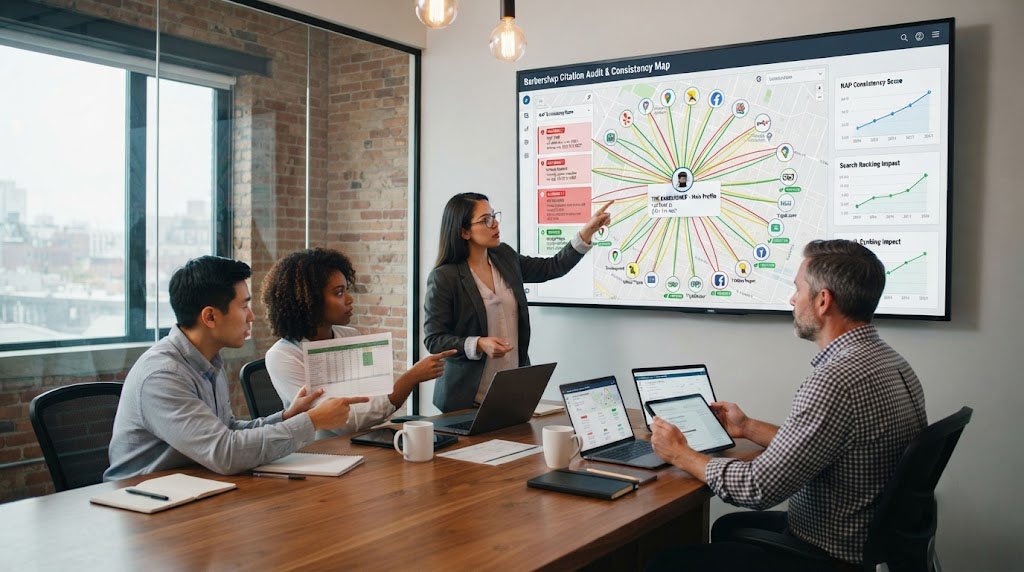
A citation is an online mention of a business’s name, address, phone number, website, or other identifying details.
Citations may appear on:
- Business directories
- Industry directories
- Chamber of commerce websites
- Community websites
- Local publications
- Booking platforms
- Social profiles
- Business associations
The most important objective is consistency.
Use one master business information document containing:
- Exact business name
- Complete address
- Primary phone number
- Website URL
- Booking URL
- Business description
- Opening hours
- Categories
- Social profile links
An SEO company should audit duplicate, outdated, and incorrect listings rather than submitting the business to hundreds of low-quality websites. Building this into a routine maintenance checklist keeps details accurate as hours, prices, and services change.
Citations should be treated as business-data consistency and customer-discovery assets—not as a shortcut that guarantees rankings.
Step 10Add Local Business Structured Data
Structured data provides search engines with explicit information about a page and the business represented on it.
Appropriate LocalBusiness markup may include:
- Business name
- Address
- Telephone number
- Website
- Opening hours
- Logo
- Images
- Price range
- Geographic information
- Social profiles
Google states that LocalBusiness structured data can provide information about business hours, departments, and other business details. It should be validated with the Rich Results Test and monitored after implementation.
Structured data must match information visible on the website. Do not add fake ratings, services, locations, or information that users cannot see on the page.
Schema markup supports understanding, but it does not guarantee a special search appearance or a higher ranking.
Step 11Use Social Media to Support the Customer Journey
Social media should not be treated as a substitute for SEO.
Use it to distribute visual proof, build familiarity, encourage branded searches, bring visitors to service pages, and make rebooking easier.
Effective barbershop content may include:
- Before-and-after transformations
- Haircut process videos
- Barber introductions
- Grooming tips
- Style consultations
- Shop culture
- Customer reactions
- Available appointment reminders
- Seasonal hairstyle ideas
- Behind-the-scenes content
Every profile should use consistent business information and include a working website or booking link.
The strongest social content should lead customers somewhere useful. For example, a skin fade video could link to the skin fade service page, barber portfolio, or booking page.
Social engagement alone should not be presented as a guaranteed Google ranking factor. Its practical value comes from discovery, credibility, audience development, content distribution, and customer retention.
Step 12Track Customer Behavior With Heatmaps and Session Recordings
Traffic data tells you that someone visited. Behavior data helps explain what happened after they arrived.
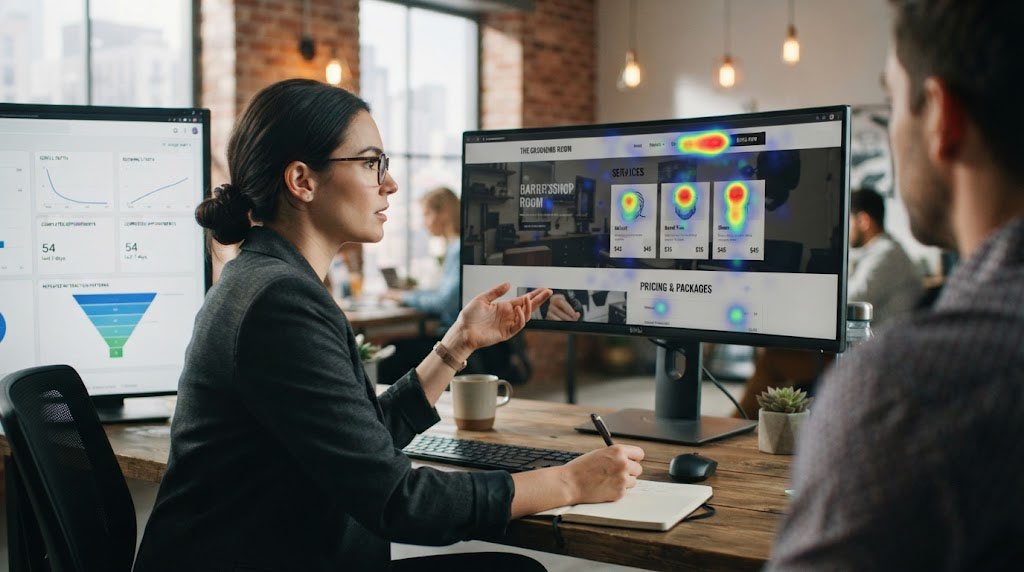
Microsoft Clarity can provide website behavior information through heatmaps, session recordings, dashboards, and filters. Heatmaps can show click and scroll activity across desktop, tablet, and mobile experiences.
For a barbershop website, review whether visitors:
- Notice the booking button
- Click non-clickable elements
- Abandon the booking page
- Scroll far enough to see pricing
- Struggle with the mobile menu
- Repeatedly click a broken button
- Leave after opening the booking widget
- Ignore important service information
Do not look at one recording and redesign the website immediately. Look for repeated patterns across multiple sessions.
For example:
- Many clicks on a haircut image may suggest users expect it to open a gallery.
- Repeated clicks on pricing text may mean users expect more detail.
- Booking abandonment after service selection may indicate too many form fields.
- Low scroll depth may mean important content appears too far down the page.
- Mobile rage clicks may reveal a broken or slow interface.
Step 13Measure Bookings, Not Just Rankings
Ranking reports are useful, but they do not show the complete business outcome.
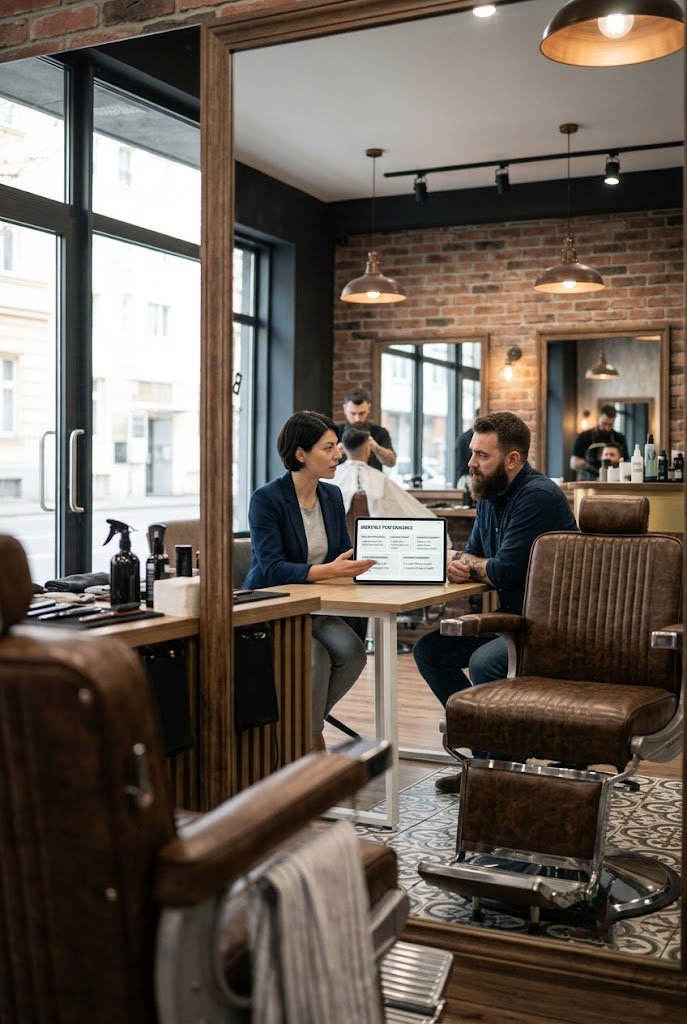
A monthly barbershop SEO dashboard should include:
- Organic search impressions
- Organic clicks
- Important keyword positions
- Google Business Profile views
- Phone-button clicks
- Website clicks
- Direction requests
- Online bookings
- Booking conversion rate
- Revenue by acquisition source
- New and returning customers
- Review growth
- Average rating
- Most-booked services
- Most-booked barbers
- Booking abandonment rate
Google Business Profile performance reporting can include calls, website clicks, directions, and bookings. Completed booking data is available when bookings are managed through a supported booking provider.
Connect website analytics with booking and call-tracking data where possible. This makes it easier to understand whether a customer came from a service page, article, Business Profile, social post, referral, or direct visit. For a sense of what measurable improvement looks like in practice, see this documented website performance turnaround.
The most useful question is not:
“Did our rankings increase?”
It is:
“Which improvements produced more qualified appointments and repeat customers?”
This distinction — separating rankings, traffic, leads, completed bookings, and revenue — is also what separates vanity reporting from genuinely useful small-business website care.
Step 14A Practical 90-Day Barbershop SEO Plan
Fix the Foundation
During the first month:
- Complete a technical and content audit
- Check indexing and crawlability
- Repair broken pages and links
- Improve mobile usability
- Compress large images
- Review the website structure
- Map keywords to individual pages
- Optimize the Google Business Profile
- Correct business information
- Connect the booking system
- Install analytics and behavior tracking
- Establish baseline ranking and conversion data
Build Relevance and Trust
During the second month:
- Improve primary service pages
- Publish missing service pages
- Create individual barber profiles
- Add original haircut photographs
- Build the first topic cluster
- Improve internal linking
- Start a compliant review request process
- Correct important directory listings
- Publish useful Business Profile updates
- Create social content that supports website pages
Improve Conversion & Expand Authority
During the third month:
- Analyze heatmaps and recordings
- Simplify the booking journey
- Test booking buttons and page layouts
- Update weak or outdated content
- Pursue relevant local mentions and links
- Expand the strongest content cluster
- Compare bookings by channel
- Identify the highest-converting services
- Present a monthly report
- Build the next 90-day roadmap
SEO improvements may take different amounts of time to affect search visibility. Google notes that some changes may show results within days, while broader site-level improvements can take several months, and no specific ranking outcome is guaranteed.
Avoid TheseCommon Barbershop SEO Mistakes
Avoid these common problems:
- Targeting every page with the same keyword
- Using one page for all services
- Creating fake location pages
- Publishing generic AI content without barber expertise
- Using inconsistent business information
- Ignoring mobile booking problems
- Uploading duplicate or heavily filtered images
- Buying fake reviews
- Offering discounts for positive reviews
- Sending every link to the homepage
- Installing a booking system without testing it
- Measuring traffic without measuring appointments
- Ignoring old content after publication
- Allowing expired hours and prices to remain online
- Promising guaranteed Google Map 3-pack rankings
A professional SEO company should explain what it changed, why it changed it, who owns the business accounts, and how results are measured. Google’s third-party policies require agencies managing Business Profiles to communicate changes transparently and ensure that the client retains ownership or co-ownership of the profile.
FAQFrequently Asked Questions About SEO for Barbershops
How long does SEO for a barbershop take?
Can a barbershop rank without a website?
How many Google Business Profile photos should a barbershop upload?
Should every barber have an individual page?
Is Booksy required for barbershop SEO?
Do social media signals directly improve barbershop rankings?
Should a barbershop publish blog content?
Can an SEO company guarantee Map 3-pack placement?
In SummaryTurn Search Visibility Into Real Appointments
Successful barbershop SEO connects visibility, trust, usability, and booking convenience.
A complete strategy improves the website, builds useful service content, strengthens the Google Business Profile, collects genuine reviews, integrates online booking, maintains accurate business information, improves website speed, distributes visual content, and measures completed appointments.
The objective is not to chase rankings without context. It is to create a reliable system that helps the right customers discover the barbershop, trust the quality of its work, and complete an appointment without unnecessary friction. That is also the case for why ongoing maintenance matters — the system only keeps working if the website behind it does.
A professional barbershop SEO company should continuously maintain this system—updating content, monitoring rankings, testing booking journeys, analyzing heatmaps, correcting technical problems, and connecting marketing activity to actual customer and revenue growth.
Ready to Grow Your Barbershop Online?
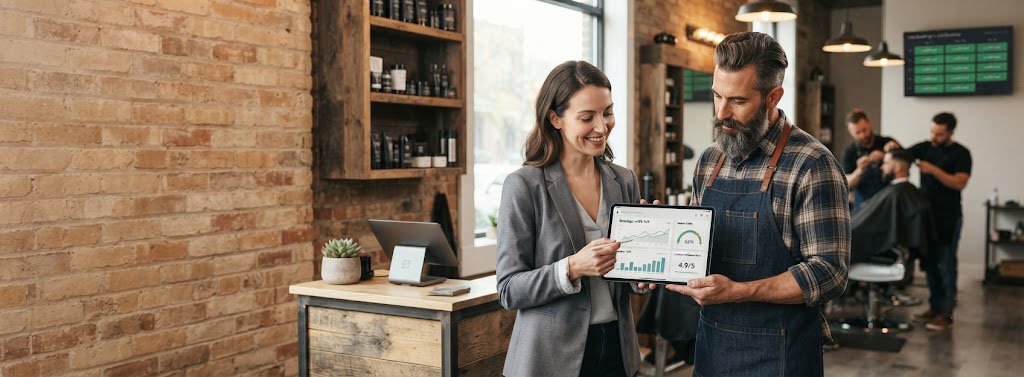
Our SEO team can help improve your website, local visibility, reviews, content, booking experience, and conversion tracking through a strategy built around real appointments—not vanity metrics.